Halliburton enhances seismic workflow creation with Amazon Bedrock and Generative AI
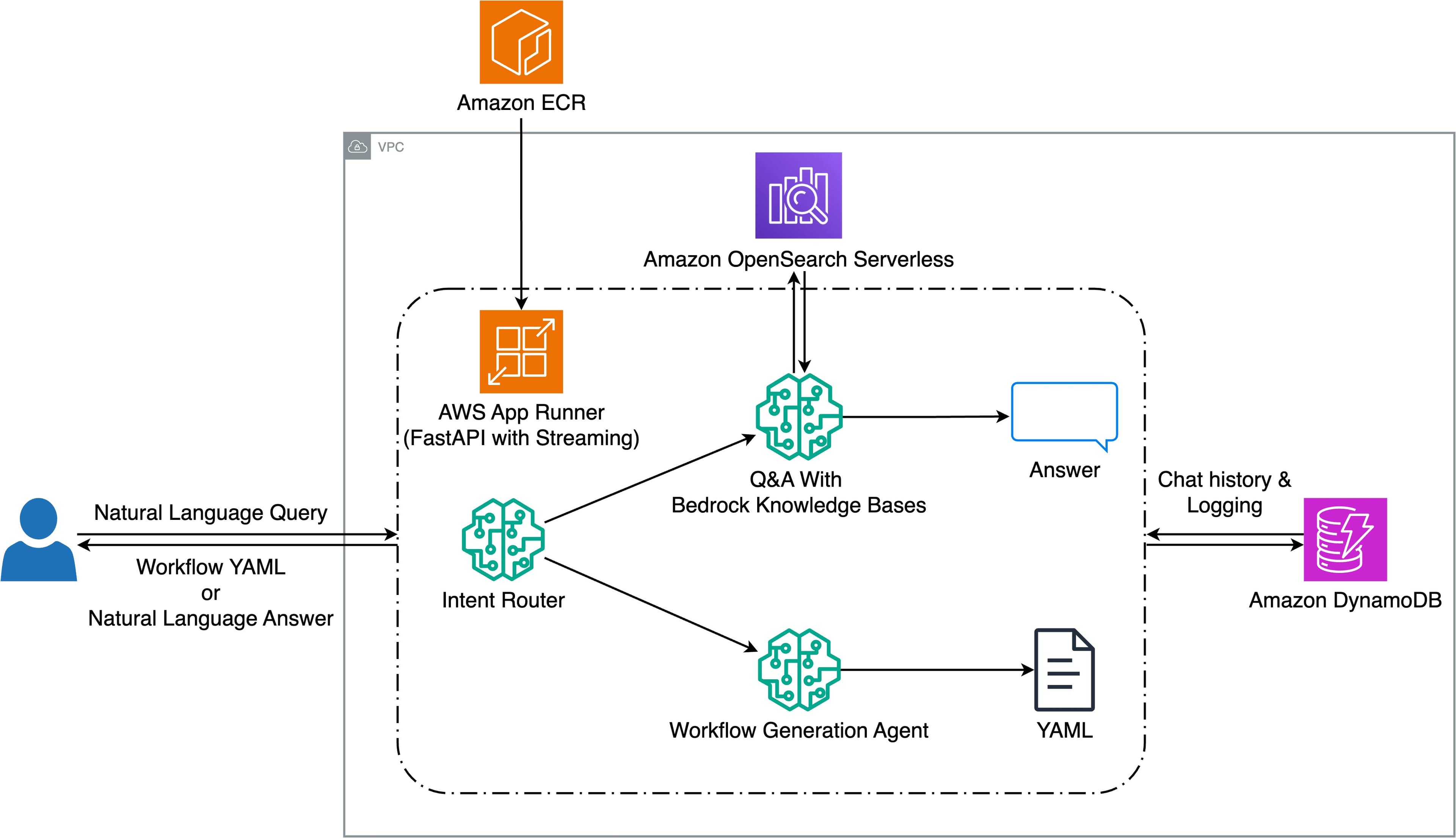
Artificial Intelligence Halliburton enhances seismic workflow creation with Amazon Bedrock and Generative AI Seismic data analysis is an essential component of energy exploration, but configuring complex processing workflows has traditionally been a time-consuming and error-prone challenge. Halliburton’s Seismic Engine, a cloud-native application for seismic data processing, is a powerful tool that previously required manual configuration of approximately 100 specialized tools to create workflows. This process was not only time-consuming but also required deep expertise, potentially limiting the accessibility and efficiency of the software. To address this challenge, Halliburton partnered with the AWS Generative AI Innovation Center to develop an AI-powered assistant for Seismic Engine. The solution uses Amazon Bedrock, Amazon Bedrock Knowledge Bases, Amazon Nova, and Amazon DynamoDB to transform complex workflow creation into conversations. Geoscientists and data scientists can configure processing tools through natural language interaction instead of manual configuration. In this post, we’ll explore how we built a proof-of-concept that converts natural language queries into executable seismic workflows while providing a question-answering capability for Seismic Engine tools and documentation. We’ll cover the technical details of the solution, share evaluation results showing workflow acceleration of up to 95%, and discuss key learnings that can help other organizations enhance their complex technical workflows with generative AI. Our collaboration with AWS has been instrumental in accelerating subsurface interpretation workflows. By integrating Amazon Bedrock services with Halliburton Landmark’s DS365 Seismic Engine, we were able to reduce traditionally time‑consuming workflow‑building tasks by an order of magnitude. This generative AI–powered workflow assistant not only improves efficiency and accuracy but also makes our advanced geophysical tools more accessible to a broader range of users. The scalable cloud‑native architecture on AWS has enabled us to deliver a seamless, conversational experience that fundamentally improves productivity across subsurface workflows. — Phillip Norlund, Manager of Subsurface Technologies, Halliburton Landmark — Slim Bouchrara, Senior Product Owner of Subsurface R&D, Halliburton Landmark Solution overview Our project aimed to address two key objectives: transforming natural language queries into executable seismic workflows, and providing an intelligent question and answer (Q&A) system for Seismic Engine documentation. To achieve this, we developed a solution using Amazon Bedrock that enables geoscientists to interact with complex seismic tools through natural conversation.The backbone of our system is a FastAPI application deployed on AWS App Runner, which handles user queries through a streaming interface. When a user submits a query, an intent router powered by Amazon Nova Lite analyzes the request to determine whether it’s seeking workflow generation or technical information. For Q&A requests, the system uses Amazon Bedrock Knowledge Bases with Amazon OpenSearch Serverless to provide relevant answers from indexed documentation. For workflow requests, a generation agent using Anthropic’s Claude on Amazon Bedrock creates YAML workflows by selecting from 82 available Seismic Engine tools. To maintain context and enable multi-turn conversations, we integrated Amazon DynamoDB for chat history and interaction logging. The system supports streaming responses for both Q&A and workflow generation, providing immediate feedback to users as the system processes their requests. This architecture allows complex technical…