Understanding Convolutions on Graphs
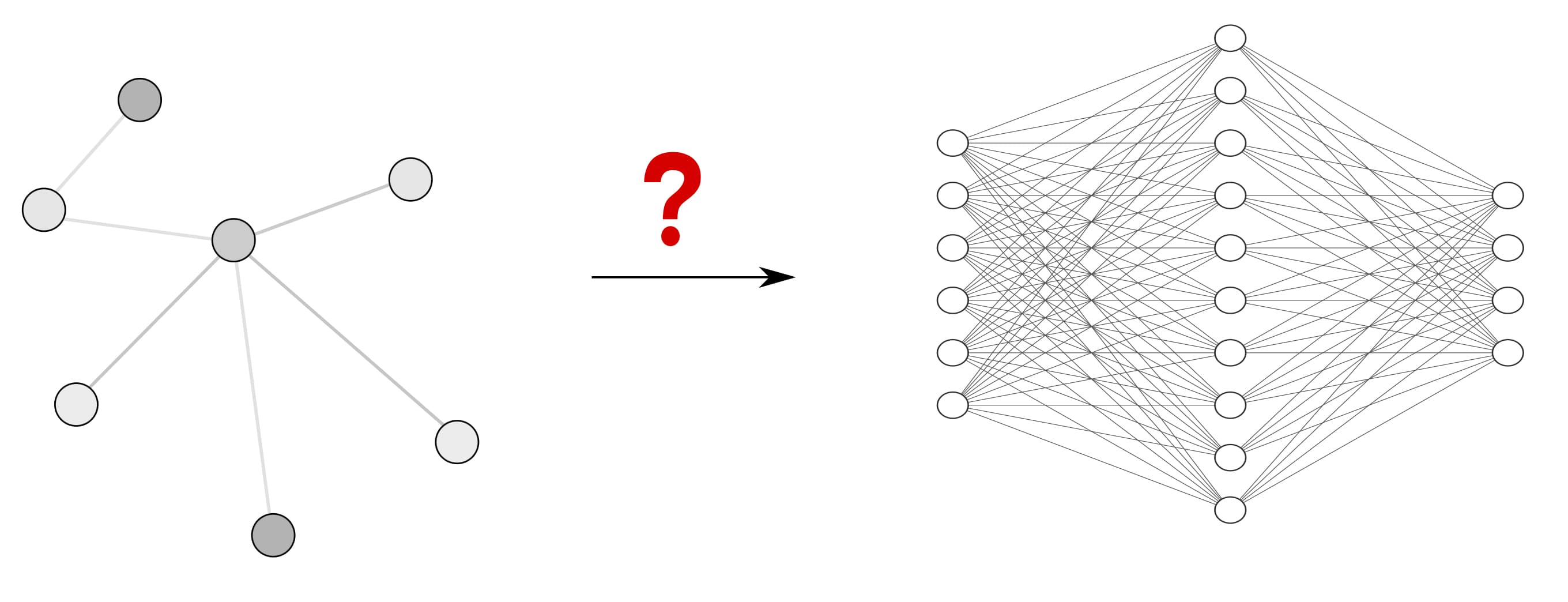
Understanding the building blocks and design choices of graph neural networks. This article is one of two Distill publications about graph neural networks. Take a look at A Gentle Introduction to Graph Neural Networks Many systems and interactions - social networks, molecules, organizations, citations, physical models, transactions - can be represented quite naturally as graphs. How can we reason about and make predictions within these systems? One idea is to look at tools that have worked well in other domains: neural networks have shown immense predictive power in a variety of learning tasks. However, neural networks have been traditionally used to operate on fixed-size and/or regular-structured inputs (such as sentences, images and video). This makes them unable to elegantly process graph-structured data. Graph neural networks (GNNs) are a family of neural networks that can operate naturally on graph-structured data. By extracting and utilizing features from the underlying graph, GNNs can make more informed predictions about entities in these interactions, as compared to models that consider individual entities in isolation. GNNs are not the only tools available to model graph-structured data: graph kernels In this article, we will illustrate the challenges of computing over graphs, describe the origin and design of graph neural networks, and explore the most popular GNN variants in recent times. Particularly, we will see that many of these variants are composed of similar building blocks. First, let’s discuss some of the complications that graphs come with. Graphs are extremely flexible mathematical models; but this means they lack consistent structure across instances. Consider the task of predicting whether a given chemical molecule is toxic Looking at a few examples, the following issues quickly become apparent: Representing graphs in a format that can be computed over is non-trivial, and the final representation chosen often depends significantly on the actual problem. Extending the point above: graphs often have no inherent ordering present amongst the nodes. Compare this to images, where every pixel is uniquely determined by its absolute position within the image! As a result, we would like our algorithms to be node-order equivariant: they should not depend on the ordering of the nodes of the graph. If we permute the nodes in some way, the resulting representations of the nodes as computed by our algorithms should also be permuted in the same way. Graphs can be really large! Think about social networks like Facebook and Twitter, which have over a billion users. Operating on data this large is not easy. Luckily, most naturally occuring graphs are ‘sparse’: they tend to have their number of edges linear in their number of vertices. We will see that this allows the use of clever methods to efficiently compute representations of nodes within the graph. Further, the methods that we look at here will have significantly fewer parameters in comparison to the size of the graphs they operate on. There are many useful problems that can be formulated over graphs: A common precursor in solving many of these problems is node representation learning:…
