Monarch: an API to your supercomputer
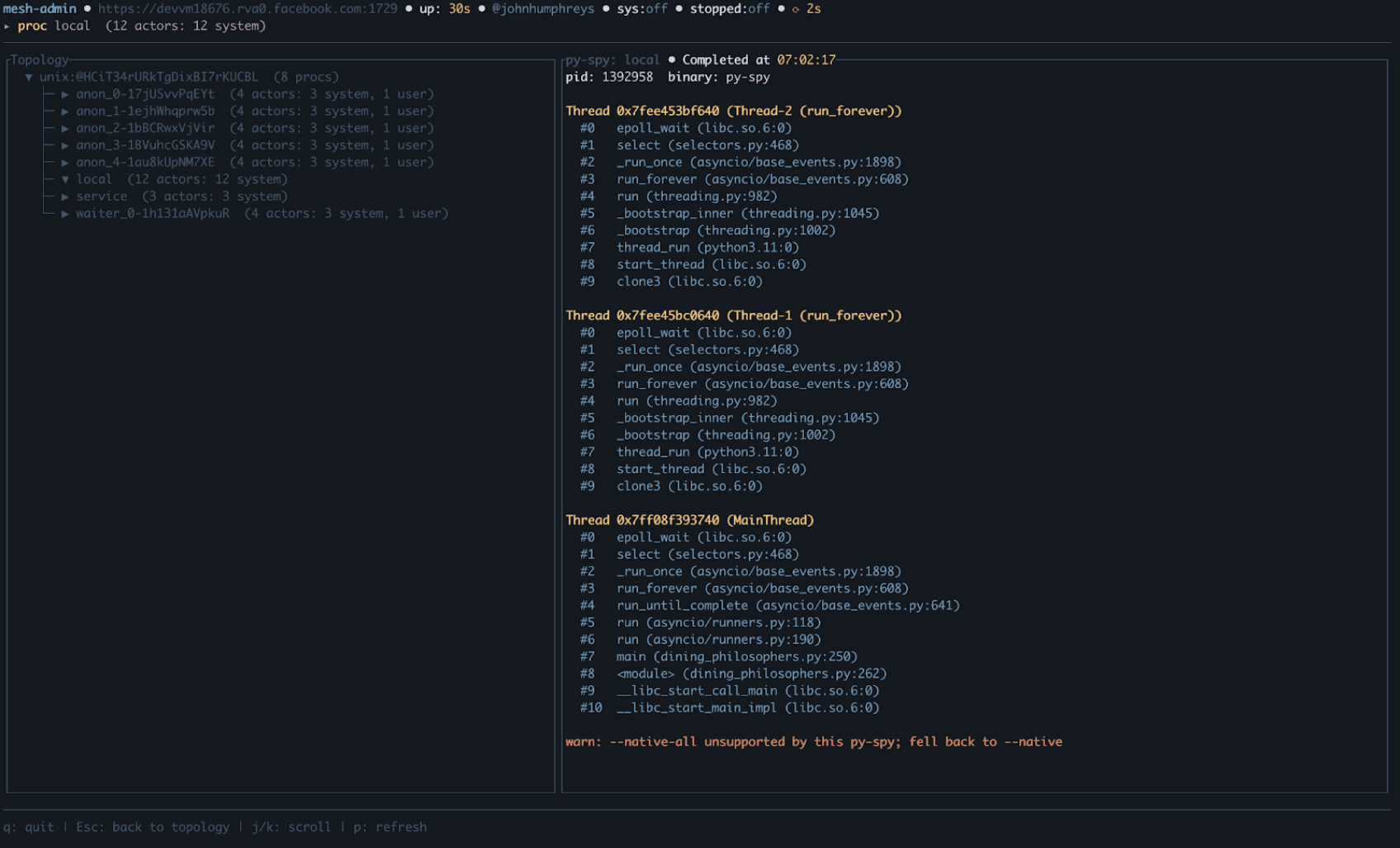
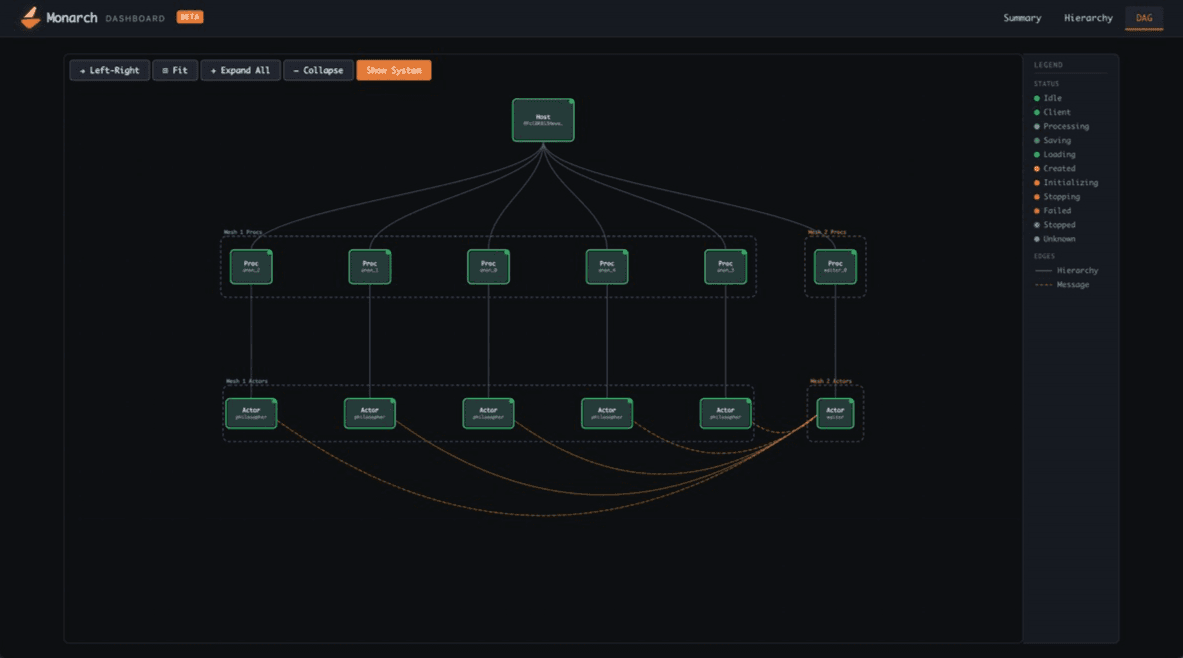
Getting distributed training jobs to run on huge clusters is hard! This is especially true when you start looking at more complex setups like distributed reinforcement learning. Debugging these kinds of jobs is frustrating, and the turnaround time for changes tends to be very slow. Monarch is a distributed programming framework for PyTorch that makes the cluster programmable through a simple Python API. It exposes the supercomputer as a coherent, directly controllable system—bringing the experience of local development to large-scale training, as if your laptop had 1000s of GPUs attached. A complete training system can be defined in a single Python program. Core primitives are explicit and minimal, enabling higher-level capabilities—fault tolerance, orchestration, tooling integration—to be built as reusable libraries. Monarch is optimized for agentic usage, providing consistent infrastructure abstractions and exposing telemetry via standard SQL-based APIs that agents already excel at using. Agents can do a lot of development tasks by just running on your dev machine, and Monarch is really good at turning your devmachine into a supercomputer, leveling-up those agents. The project launched at the PyTorch conference in October 2025; you can read about it here: Introducing PyTorch Monarch. This blog covers how Monarch has evolved into an effective framework for agent-driven training development. It will also cover Monarch’s major improvements since October, including native Kubernetes support, RDMA improvements, distributed telemetry, and more. Agentic Development in Monarch By representing your supercomputing cluster through a coherent model of hosts, procs, and actors, and pairing it with “batteries included” infrastructure, Monarch gives your agent superpowers! It can directly manage and debug running code, rapidly sync dependencies and data, run new code, and provision additional hosts, procs, and actors in an efficient and consistent way regardless of where it is deployed. Let’s quickly review some key features Monarch uses to empower agentic development: - RDMA-Powered Remote File System – Distribute files from the client on a read-only mounted filesystem to every host in the job via RDMA. This lets you very rapidly sync code, dependencies, and containers while iterating on the machine learning ideas. Monarch’s RDMA filesystem in turn is built on Monarch RDMA buffers and PyFuse. - Distributed SQL Telemetry – Use Monarch’s integrated lightweight distributed SQL engine to collect live state information, pyspy traces, and logs from all distributed processes/actors/etc. We used Monarch to directly run a DataFusion distributed SQL query engine *in situ*; each node in turn writes live state information into a set of tables that can then be queried directly and efficiently by an agent. This makes it very easy to explore the state of the system when debugging. - Jobs API – Provision resources (hosts) once and run as many jobs as needed on them without paying the repeated allocation penalty. Monarch comes with support for Kubernetes and SLURM; other schedulers can be integrated by implementing a Monarch Job. Collectively, these features enable agents to be efficient across some key phases of development; they can restart jobs fast, sync new code, dependencies, and data…