Inexpensive seafloor-hopping submersibles could stoke deep-sea science—and mining

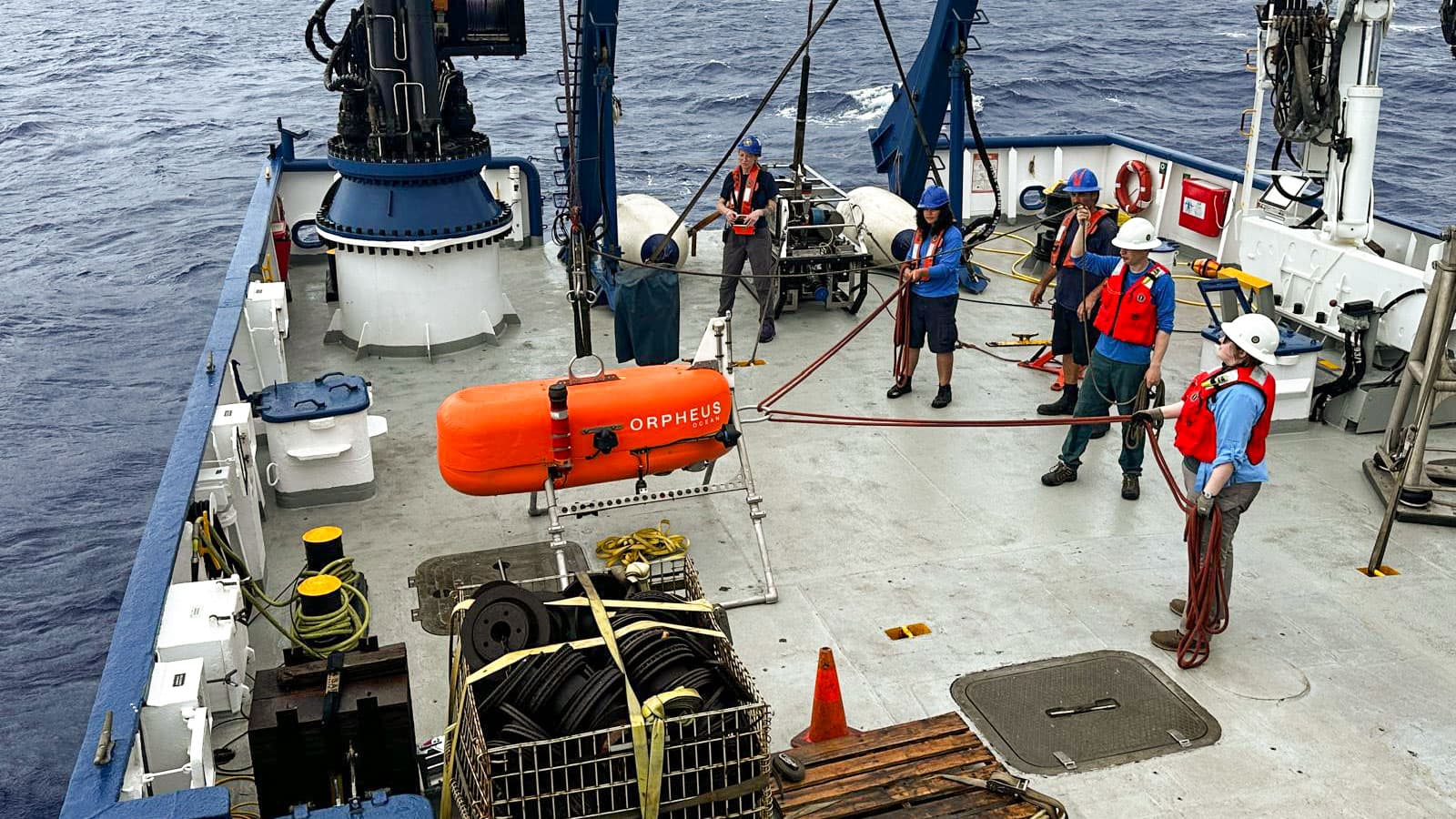
Inexpensive seafloor-hopping submersibles could stoke deep-sea science—and mining A company called Orpheus Ocean wants to go “deep for cheap.” Smack dab between Australia and South America, the US National Oceanic and Atmospheric Administration (NOAA) research vessel Rainier is currently on a mission to map more than 8,000 square nautical miles of the Pacific seafloor in search of critical mineral deposits. But it isn’t doing it alone; for a month starting this week, it will deploy two oblong neon submersibles as the project’s special agents, sending them nearly 6,000 meters down to hop along the seafloor. The submersibles, built by the young company Orpheus Ocean, are designed to explore just this environment: a squelchy substrate that teems with life of all kinds, from tiny microbes to worms and snails, along with egg-size “nodules” of metals—such as copper, cobalt, nickel, and manganese—that are crucial for technologies worldwide. Scientists and companies have long sought to probe the deep sea and bring such treasures to the surface. Orpheus, which spun off from the Woods Hole Oceanographic Institution (WHOI) in 2024, could be well positioned to make those possibilities a lot more economical. The company has designed its vehicles on a simple philosophy: “deep for cheap,” says Jake Russell, Orpheus’s cofounder and CEO, who is a chemist by training. The vehicles cost a couple of hundred thousand dollars each to build, whereas existing options can range from $5 million to $10 million. And unlike most autonomous ocean vehicles, they can push into the seafloor and capture cores of sediment—and the creatures within. Orpheus’s engineers have been tinkering with their deep-sea designs for years, much of the work taking place at WHOI and in collaboration with NOAA and the National Aeronautics and Space Administration. Its prototype vehicles were rated capable of diving to 11,000 meters—the deepest part of the Mariana Trench. They’ve completed two commercial deployments, but this new expedition marks the submersibles’ biggest test yet: operating over large ranges for multiple weeks and with multiple instruments at play. Using Rainier as their home base on the ocean’s surface, the vehicles will swim out for 10 kilometers at a time, taking one high-resolution image every second and up to eight physical samples from the seafloor apiece. If all goes well, the test could help establish the vehicles as a tool for government agencies, scientists, and companies that hope to probe the vastly understudied deep sea and the resources it holds. And while they’re not the only option on the market, Orpheus hopes their size and low building cost will soon make them one of the most accessible. At present, to reach these depths scientists must wait for time on a limited and expensive set of submersibles owned by government agencies and research institutes. That formula lends itself better to capturing snapshots of the deep sea than it does to probing its interconnected ecological and biogeochemical systems. “A lot of this region that we're surveying … has really never been explored in any kind of detail,” says…