How Automated Reasoning checks in Amazon Bedrock transform generative AI compliance
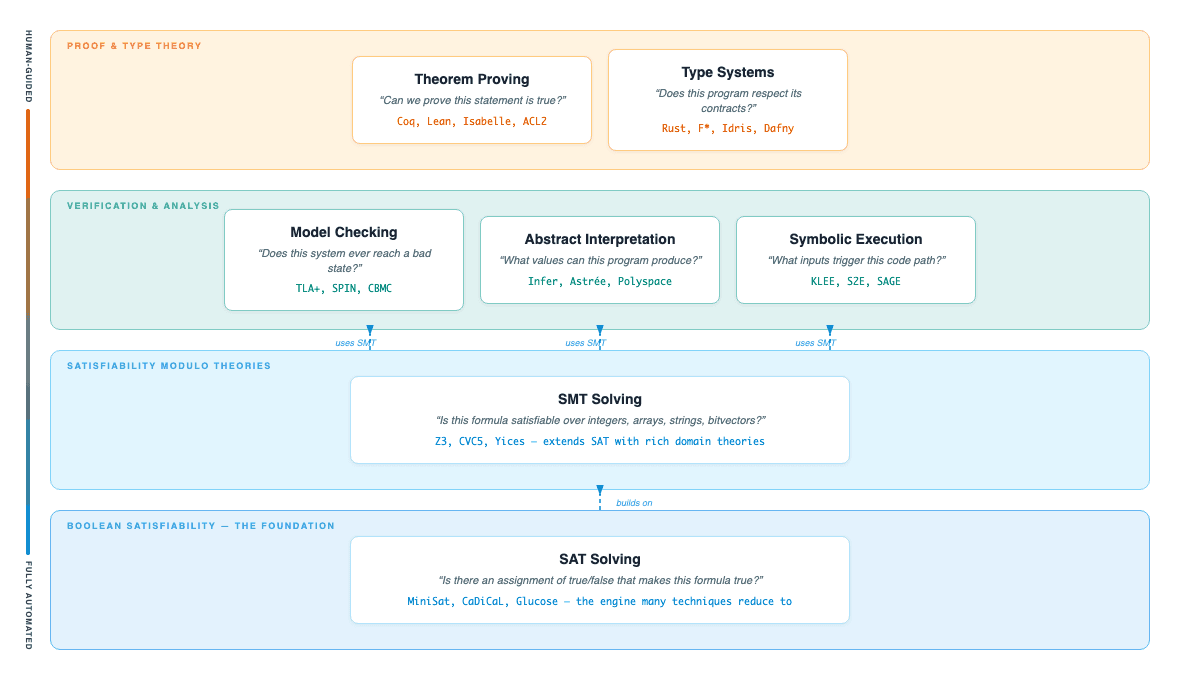
Artificial Intelligence How Automated Reasoning checks in Amazon Bedrock transform generative AI compliance Compliance teams in regulated industries spend weeks on manual reviews, pay for outside consultants, and still face audit gaps when AI outputs lack formal proof. Automated Reasoning checks in Amazon Bedrock Guardrails address this by replacing probabilistic AI validation with mathematical verification, turning AI-generated decisions into provably correct, auditable results. In this post, you’ll learn why probabilistic AI validation falls short in regulated industries and how Automated Reasoning checks use formal verification to deliver mathematically proven results. You’ll also see how customers across six industries use this technology to produce formally verified, auditable AI outputs, and how to get started. The compliance challenge Regulated industries face high-stakes compliance challenges. Hospitals navigate radiation safety regulations. Financial institutions classify AI risk under the EU AI Act. Insurance carriers answer coverage questions where incorrect responses carry regulatory consequences. Manual review, costly consultants, and legacy processes don’t scale. Many teams building generative AI or agentic solutions reach for a large language model (LLM)-as-a-judge pattern: using a second LLM to evaluate the first model’s outputs. While intuitive, this approach carries a fundamental limitation: one probabilistic system validating another cannot provide the formal, auditable guarantee that regulated industries require. How Automated Reasoning checks deliver provable compliance against a defined set of rules and constraints Automated Reasoning checks in Amazon Bedrock Guardrails apply formal verification methods, grounded in mathematical logic, to validate AI-generated outputs against a defined set of rules and constraints. You get a provably correct, auditable assessment for every request. Consider the following example. An AI assistant tells a customer their insurance claim is covered. With an LLM-as-a-judge approach, a second model reviews that answer and says “looks right.” With Automated Reasoning checks, the system mathematically proves the answer is consistent with every rule in the policy. If rules are violated, it identifies exactly which ones and why. Automated reasoning develops algorithms that automatically derive logical conclusions from given premises. It draws on decades of research in formal verification (mathematically proving a system meets its specification), satisfiability solving (determining whether a logical formula can be satisfied), and mathematical logic. These same foundations verify hardware designs, prove cryptographic protocols sound, and pinpoint exactly where safety-critical software violates its specification. Automated Reasoning checks now apply them to generative AI. The checks combine neural networks with logical reasoning to validate AI outputs against defined rules and constraints, transforming probabilistic responses into formally verified, auditable artifacts. AWS offers Automated Reasoning checks as one of several responsible AI tools to help you safeguard your AI applications. For a detailed walkthrough of how to configure Automated Reasoning policies and see verification in action, see Minimize generative AI hallucinations with Amazon Bedrock Automated Reasoning checks. Industry applications Organizations across healthcare, finance, energy, insurance, and education use Automated Reasoning checks to verify AI outputs and explain compliance decisions with audit-ready evidence. Operational engineering: Amazon Logistics The Amazon Logistics team reduced engineering review time from approximately 8 hours to minutes while…